


Erich Gherbaz
Cutting repeat field visits by 67% through streamlined workflows
UX designer
SaaS finserve
2 months
2024
Context
As a UX Designer on the Product Team, I worked on...
Simplifying data verification on the field with off-line capabilities and ability to save data to verify later.
A navigation that allows users to move through a multi-layered system that collects over 200+ data points.
Determine opportunities for automating data collection processes.
A specified process so that users don’t forget to gather specific details required.
Web and mobile usage.
The problem
Unclear Requirements Causing Delays and errors
Sales Agents are the first line of engagement with customers, responsible for collecting and validating critical loan application data. However, 2 recurring challenges in their workflow were limiting efficiency and creating friction across teams:
Constant back and forth between teams
Sales Agents often need to visit a customer multiple times in order to obtain the documentation required by other teams.
Limited Verification Capabilities
Data needed verification both in the office and in the field, yet poor or absent internet connectivity made this process unreliable.
Research & insights
Understanding Our Users: Sales Agents in the Field
Through 10+ user interviews with sales professionals and shadowing, we uncovered the following key insights:
What information is needed?
Unclear mandatory data points resulted in repeated customer visits.
Login stage
Sales agents are in charge of the first preliminary point to capture customer data and discard high risk customers.
Lack of ownership
Unclear responsibility between Sales and Credit Teams led to delays.
Process
From 0 → Wireframes → Figma
When I joined the project, the company was still running on paper processes. We kicked off by gathering requirements, researching the market, and studying competitors, but internal practices at other firms weren’t accessible. So we broke the problem down step by step.
First, we mapped the volume of data sales agents needed to capture. Then we explored layouts and navigation patterns that could simplify this complex task. I ran ongoing reviews with product, engineering, and stakeholders to test feasibility and usability.
Feedback led to multiple iterations: we refined data collection flows, automated elements of the process, and pulled in information from documents and APIs. The process became faster, but it took time to reach the right balance.
In the end, we delivered a polished Figma prototype. Because developers had been closely involved throughout, hand-off was smooth and the design moved into production quickly.
Iterations
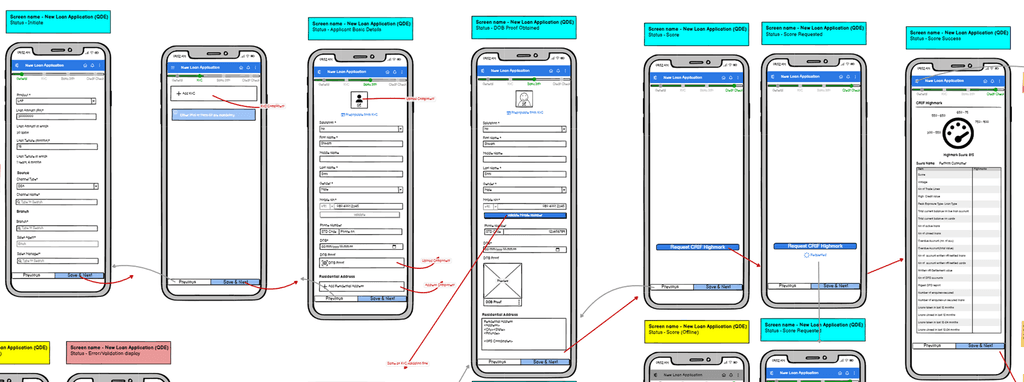
Define the flow
Solution
Streamlining complex workflows
My final designs reflect what I learned from previous iterations and what I heard from the different teams. We needed a faster, automated, more clear way to collect data.
Key design decisions
Finding appropriate solutions

Automate data capture
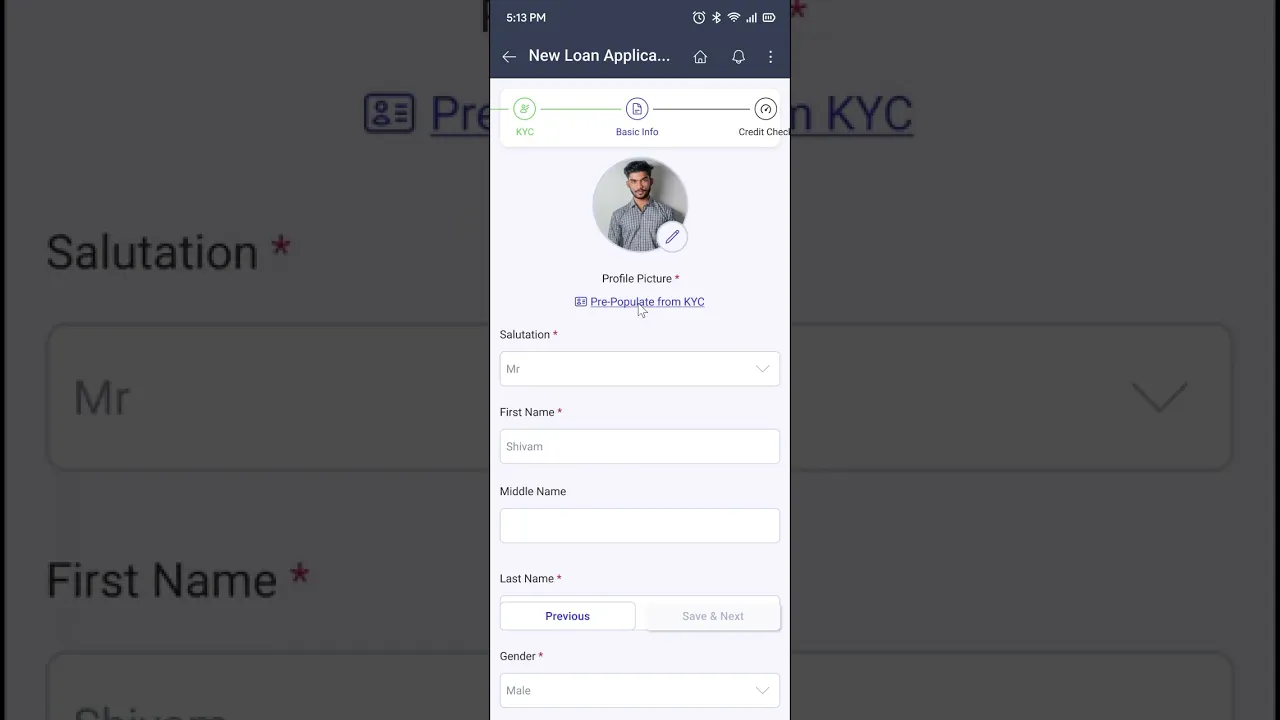
Found ways to utilize customer documentation to autocomplete details in the different sets of data needed.
Clarify priority items
Provided sales agents with clear mandatory indications as to what is the bear minimum information needed to complete their workflow
Specified sections
Implemented clear indications for the different sets of information that needed to be collected from the customers.
Credit verification
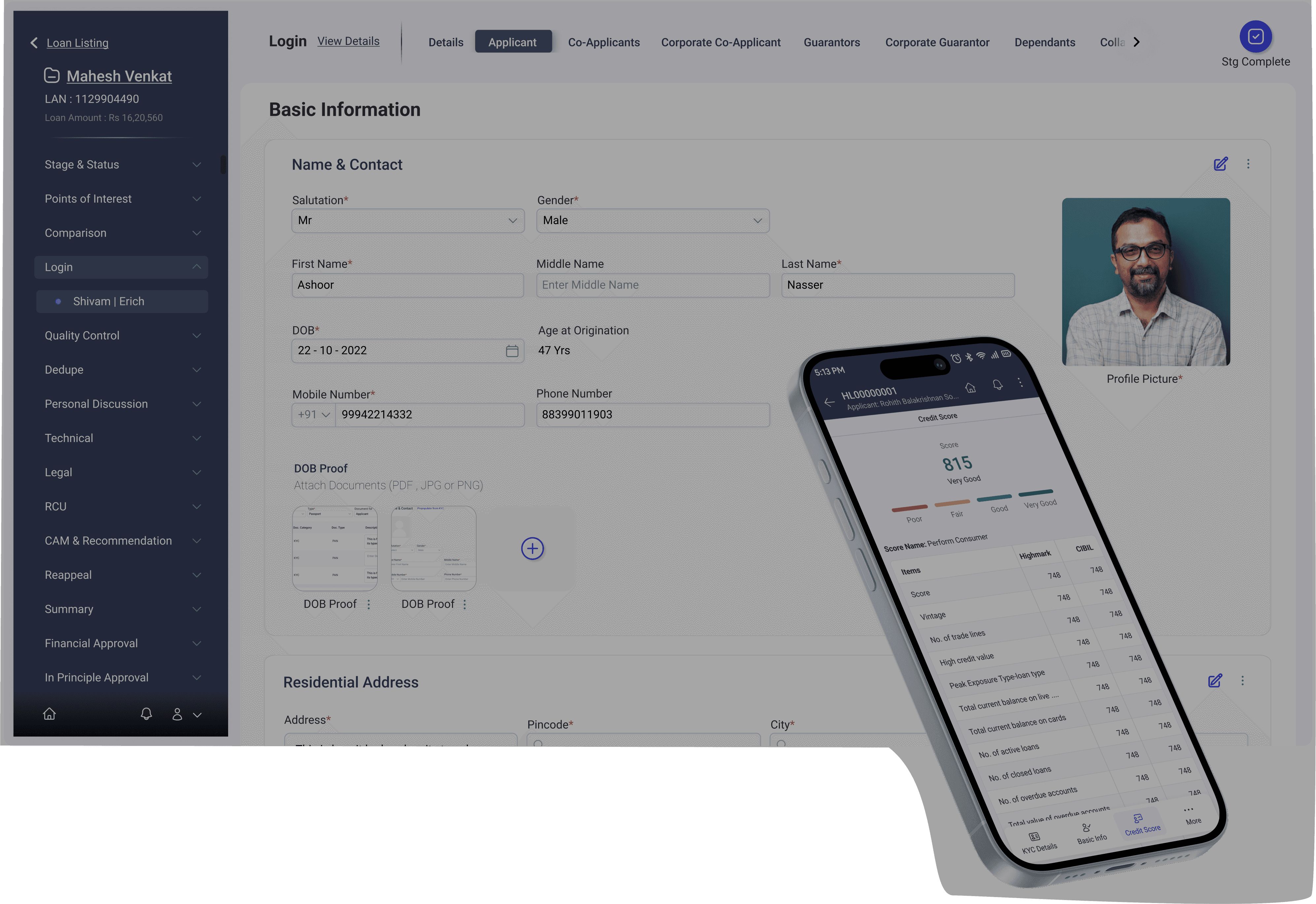
To help sales agents make a decision, they were given the customers overall credit score at the end of their workflow, so that they could make a decision
Impact
From confusion to clarity
Reduced field agent revisits by 67%.
97% reduction of limbo cases.
Reduced missing documentation claims by 83%.
Agents can work offline and sync information later reducing data errors, duplicate effort and visits.
“It is a pleasure to work with the team, and I couldn't be happier with their approach and clarity of thought. The team is professional, responsive, and efficient. Their expertise was evident throughout their process, especially given the complexity of our business. They have been continuously bringing innovative ideas to enhance usability, productivity, and efficiency for our employees and users. If you need a UX design & engineering partner who would put in time and effort to understand business and deliver top-notch solutions, I highly recommend them. We continue to collaborate for ongoing application improvements, and it has been great working together..”
CTO
Learnings
From zero to hero
This case belongs to my first real-life project which began back in December 2023, lasted 1 year, and it was a complete Loan Origination System. Looking back, this was quite a challenge for someone who until then had only some experience. Nevertheless, my introduction to the real world of UX/UI was a success.
In my first project I learned the importance of team work and delegation. I had the chance to work very closely with PMs, designers, and both front & back-end teams.
The real challenge came when I was in charge of designing the entire mobile version of the software. However, by having constant reviews with the whole team, we managed to come up with the best solution. On the other hand, being the sole designer responsible helped me earn the confidence to make decisions and push for the user needs to be heard, and for the team to respect UX/UI patterns.
Find me also on